
'We have informed the government multiple times that the situation in the US and India are different.' 'Here, there will be a 500 MHz gap in the frequencies which will safely allow aviation without interference.'
Reliance Jio has sent a second legal opinion to the Telecom Regulatory Authority of India (Trai) on the subject of the potential allocation of satellite spectrum. The letter is written by retired Supreme Court Justice L Nageshwara Rao and argues in favour of auctions, stating that any other method for allocating spectrum apart from auctions could be constitutionally unsound. Business Standard has reviewed the letter.
With better than expected Rs 1.45 lakh crore bids coming in on the first day, the auction of 5G spectrum entered the second day on Wednesday with the opening of the fifth round. Firms run by tycoons Mukesh Ambani, Sunil Bharti Mittal and Gautam Adani as well as Vodafone Idea are participating in the e-auction to buy fifth-generation (5G) airwaves. The government received confirmed spectrum bids worth Rs 1.45 lakh crore after the completion of four rounds of spectrum bidding on the opening day on Tuesday.

It came as a surprise to all stakeholders - competing telecom companies (telcos), most analysts and even the government's internal projections on revenues from the 5G auctions. Reliance Jio disrupted all calculations by paying a stiff Rs 40,000 crore to buy 10 MHz of spectrum in the 700-MHz band, globally considered a key band for efficient 5G service coverage, along with the default 3.5 GHz band and the ultra-high speed and low-latency millimetre band of 26 GHz band. So what made Jio pay almost 45 per cent of its total spend in this auction for the 700 MHz band - much more than what it rustled up even for the 3.5 GHz band?

Adani Data Networks said it plans to create a private 5G network for its operations. However, it acquired the spectrum in the last 5G auction alongside three telecom companies. Subsequently, it was granted a unified licence for access services, which enables it to provide telecom services in the country.

Eight telecom companies, including Bharti Airtel, Vodafone and Idea Cellular, the biggest three in the country, bid a combined Rs 61,162 crore (Rs 611.62 billion) in the spectrum auction held earlier this month.

The government has suffered a loss of Rs 12,488.93 crore (Rs 124.88 billion) due to under-invoicing of gross revenue by six telecom companies including Reliance Communications, Vodafone and Bharti Airtel, the CAG said in a damning report on Friday.

The new offer is part of its strategy to turn India to an exclusively 4G market.

'Spectrum payment to push up telcos' debt to Rs 3.5 lakh cr'

In percentage terms, IndusInd Bank, SBI, HDFC, ICICI Bank and L&T were among the top losers. On the contrary, Bharti Airtel, Reliance, Sun Pharma, HCL Tech and Maruti Suzuki emerged as major gainers.

Telcos Reliance Jio and Bharti may post a 5-7 per cent sequential rise in revenue with a steady margin for the second quarter of FY22, according to Jefferies. Bharti's growth will be led by segmented tariff hikes taken in the second quarter ended September, while Jio's growth will be driven by continued subscriber growth, it further said. Jefferies expects the outlook on tariff hikes for Bharti, further details on JioPhone Next for Jio, and tenancy outlook for Indus Towers to be the key things to watch for in the September quarter.
.jpg)
Reliance, Birla Group, Airtel eye small finance banks.

Reports by CAG earlier on the 2008 telecom licence scam had resulted in the cancellation of 122 licences.

Bigger telecom companies are likely to get a bigger share of the 3G subscribers as they own high average revenue per user customers, who are more likely to sample premium services like 3G.

Bharti Airtel, Reliance Jio, Vodafone Idea said the Railways should not be permitted to offer commercial services like Wi-fi and voice and video communication.

Typically these are high-beta stocks and earnings are volatile

Bharti Airtel, Vodafone, Reliance Jio Infocomm and five other telecom firms will battle it out at the spectrum auction tomorrow, from which the government expects to garner at least Rs 11,300 crore (Rs 113 billion).

Adani Enterprises' proposed Rs 20,000 crore (Rs 200 billion) fundraising via fresh issue of equity shares through a public offer would be the fourth biggest by Indian companies, excluding banks and non-banking financial companies.

With slower than expected growth in smartphone penetration, operators and OEMs are joining hands to provide affordable mobile devices with attractive offers.

The management plans to invest Rs 27,000 crore in 2019-20, supported by savings of around Rs 14,000 crore that it expects to come from synergising operations of merged entities.

Vodafone-Idea is working on a multi-pronged strategy to begin its long journey to get back in the game but much hinges on how much money it can raise following the government's decision to go for equity conversion last week. Based on discussions with sources aware of the company developments and with vendors, VIL's immediate plan is to invest in increasing 4G coverage to the level of its competitors. Currently, it covers a 1 billion population with 4G while its competitors cover 1.2 billion people.
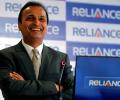
Reliance Communications could become a much more formidable opponent.

Mukesh Ambani's Reliance Jio, however, continued to add wireless subscribers
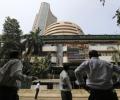
RIL became the first Indian company to hit the Rs 9.5 lakh-crore market capitalisation level. Shares of Bharti Airtel soared 7.36 per cent and Vodafone Idea rallied 34.68 per cent after both the companies announced a hike in mobile phone call and data charges from December.
Mukesh Ambani-led Reliance Jio has introduced a 20-per cent cashback offer on select prepaid plans, intensifying competition in the Indian telecommunications (telecom) market. Jio is the largest telecom service provider in India, with 443 million subscribers as of July. Jio's cashback offer will drive cross-selling across Reliance's various retail businesses, but the move is also being seen by some analysts as a signal that tariff hikes may not be around the corner just yet.

Vodafone Idea Ltd (VIL) CEO Ravinder Takkar did some plain speaking. In an analyst call after its quarterly results recently, Takkar said that the main stumbling block to raising fresh capital from investors is "pricing" - telecom tariffs, in other words. Nine months ago, the telecom company's board had cleared a proposal for raising Rs 25,000 crore from investors, after the promoters made it clear that they were not ready to pump in more money. But potential investors are concerned that without clarity on tariff hikes (there have been none for more than 18 months) they might just lose their money. The lack of visibility on raising tariffs has also impelled VIL to request the Department of Telecom (DoT) for a fresh reprieve by extending the two-year moratorium on paying its spectrum instalment of Rs 8,200 crore for another year till FY23.
Evolving a common work ethic and culture will be critical so that the merged entity does not lose focus on the common enemy outside -- and instead becomes more obsessed with internal turf wars.

Reliance-Google's new smartphone has got mixed reviews from analysts and brokerages. The phone pricing is seen unattractive for low-end customers and bundled offers are being viewed as non-disruptive. While this could slow the pace of adoption, it could set the stage for tariff hikes in the industry, feel analysts.
The development marks a watershed moment in India's telecom history since fixed-line or landline connections formed the final segment where a State-owned operator was in the top spot.

Says, Jio unlikely to gain 2% revenue market share in 2017

Many chief executives said they were talking to people at the top level in their organisations to find how their companies can help the flood victims.
Reliance Jio's decision to acquire 700 MHz in combination with the possible use of an advanced standalone (SA) 5G network could give it an edge over its rivals, according to most analysts. The dissenters argue that the stiff price tag touching Rs 40,000 crore to grab 10 MHz of spectrum in 700 to provide coverage for its SA 5G network which offers ultra-low latency (unlike non-standalone or NSA), has a long way to go in India in terms of finding use cases that can be monetised. Globally, 700 MHz is a pivotal band which provides huge coverage, indoor penetration (especially useful in India where walls are thick) and is already considered by the European Union to be the 'pioneer band' for 5G, with 3.5 GHz and 26 GHz, both of which were auctioned in India recently.

A rare bonhomie among three private telecom companies in raising tariffs coming on the back of a bailout package by the government may have helped the telecom sector avert a crisis but the challenges haven't ceased to exist as the industry faces a cash-guzzling task of rolling out 5G networks in the coming months. The sector that provides direct and indirect employment to millions is projected to see Rs 1.3 lakh crore to Rs 2.3 lakh crore of investments in the coming years in creating robust infrastructure and building telecom and network products that have been incentivised by the government through PLI and other initiatives. After years of cut-throat competition and the apex court ruling on payment of past statutory dues left some players in the lurch, billionaire Sunil Mittal's Bharti Airtel and struggling Vodafone Idea almost in tandem raised tariffs, taking the plunge they had long been talking about.

Following the October 24 Supreme Court order, the department of telecom estimated that the total liability of 15 telecom companies, including penalties and interest, would be Rs 1.47 lakh crore.
The overall wireless subscriber base increased to 114 crore at the end of June

At the moment, data and broadband is small for BSNL: it contributes 10 per cent of the company's revenue, though its share is on the rise.

Mukesh Ambani-led company will squeeze market shares and margins of existing players

Prime Minister Narendra Modi on Saturday inaugurated the 6th India Mobile Congress at Pragati Maidan in Delhi and launched 5G services. The 5G telecom services seek to provide seamless coverage, high data rate, low latency and highly reliable communications system. The three major telecom operators of the country demonstrated one use case each in front of the prime minister to show the potential of 5G technology in India.

With the new entity coming in force, Bharti Airtel will lose the tag of India's biggest telecom service provider to the new entity.

Vi will continue to offer basic voice data services to its 2G users.
 © 2026 Rediff.com - Advertise with us - Disclaimer - Privacy Policy - Sitemap - Feedback - About us - Terms of use - Grievances